Over 40 Advocates Trained to Boost Women’s Political Participation in Liberia
Source: UNDP
More than 40 representatives from civil society organizations (CSOs), women’s rights groups, gender advocates, and key national institutions have completed a three-day capacity-building workshop aimed at strengthening coordination and advocacy for increased women’s political participation in Liberia.
Jointly organized by UN Women and UNDP under the Liberia Electoral Support Project (LESP), the training was supported by the European Union, Ireland, and Sweden, with technical assistance from the UN Electoral Assistance Division (EAD) of the Department of Political and Peacebuilding Affairs.
The workshop gathered participants from the National Elections Commission (NEC), the Women’s Legislative Caucus of Liberia (WLCL), the Law Reform Commission (LRC), the Ministry of Gender, Children, and Social Protection, youth and disability organizations, and election observers. It focused on enhancing knowledge, practical advocacy skills, and strategic coordination to promote women’s leadership and political inclusion.
Expert Insights and Interactive Learning
Mr. Maarten Halff, Senior Political Affairs Officer and Electoral Systems Expert at the UN EAD in New York, facilitated virtual sessions on Obstacles to Women’s Participation in Liberia: An Analysis of the 2023 Results, Quotas in Context: An ABC of Electoral Systems, and Quotas and Quotas in the Liberian Context: Options and Implications.
These sessions offered comparative insights into how gender quotas operate across various electoral systems and their potential to enhance women’s representation in Liberia.
Additional sessions were led by Ms. Rindai Chipfunde-Vava, an international consultant from Zimbabwe, and Mr. Zage Filiposki, UNDP Liberia Electoral Specialist, using the BRIDGE (Building Resources in Democracy, Governance and Elections) curriculum.
Topics included Women’s Participation in Politics: Targets and Numbers, Sex and Gender Definitions, Equality, Level Playing Field, and International Standards of Elections, Advocacy, Campaigning, and Lobbying for Women’s Political Empowerment and Strategic Planning, Stakeholder Mapping, and Message Delivery Methods.
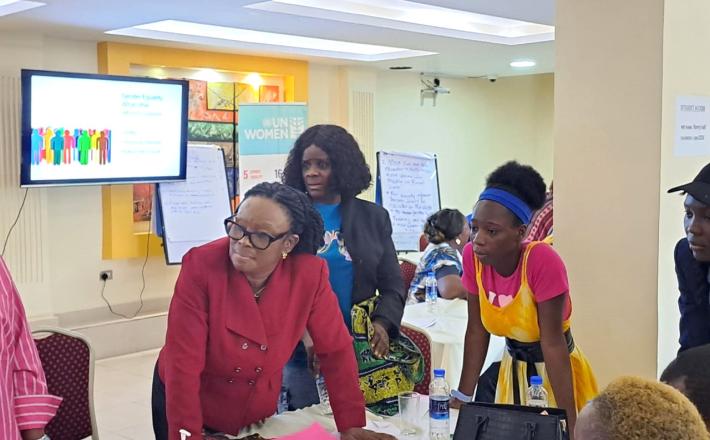
More than 40 representatives from civil society organizations (CSOs), women’s rights groups, gender advocates, and key national institutions have completed a three-day capacity-building workshop aimed at strengthening coordination and advocacy for increased women’s political participation in Liberia.
Jointly organized by UN Women and UNDP under the Liberia Electoral Support Project (LESP), the training was supported by the European Union, Ireland, and Sweden, with technical assistance from the UN Electoral Assistance Division (EAD) of the Department of Political and Peacebuilding Affairs.
The workshop gathered participants from the National Elections Commission (NEC), the Women’s Legislative Caucus of Liberia (WLCL), the Law Reform Commission (LRC), the Ministry of Gender, Children, and Social Protection, youth and disability organizations, and election observers. It focused on enhancing knowledge, practical advocacy skills, and strategic coordination to promote women’s leadership and political inclusion.
Expert Insights and Interactive Learning
Mr. Maarten Halff, Senior Political Affairs Officer and Electoral Systems Expert at the UN EAD in New York, facilitated virtual sessions on Obstacles to Women’s Participation in Liberia: An Analysis of the 2023 Results, Quotas in Context: An ABC of Electoral Systems, and Quotas and Quotas in the Liberian Context: Options and Implications.
These sessions offered comparative insights into how gender quotas operate across various electoral systems and their potential to enhance women’s representation in Liberia.
Additional sessions were led by Ms. Rindai Chipfunde-Vava, an international consultant from Zimbabwe, and Mr. Zage Filiposki, UNDP Liberia Electoral Specialist, using the BRIDGE (Building Resources in Democracy, Governance and Elections) curriculum.
Topics included Women’s Participation in Politics: Targets and Numbers, Sex and Gender Definitions, Equality, Level Playing Field, and International Standards of Elections, Advocacy, Campaigning, and Lobbying for Women’s Political Empowerment and Strategic Planning, Stakeholder Mapping, and Message Delivery Methods.